Six Days That Shook the Middle East
Some wars drag on for years. This one didn’t. The Six-Day War started on June 5, 1967, and it ended by June 10. Yet the fallout is still with us.
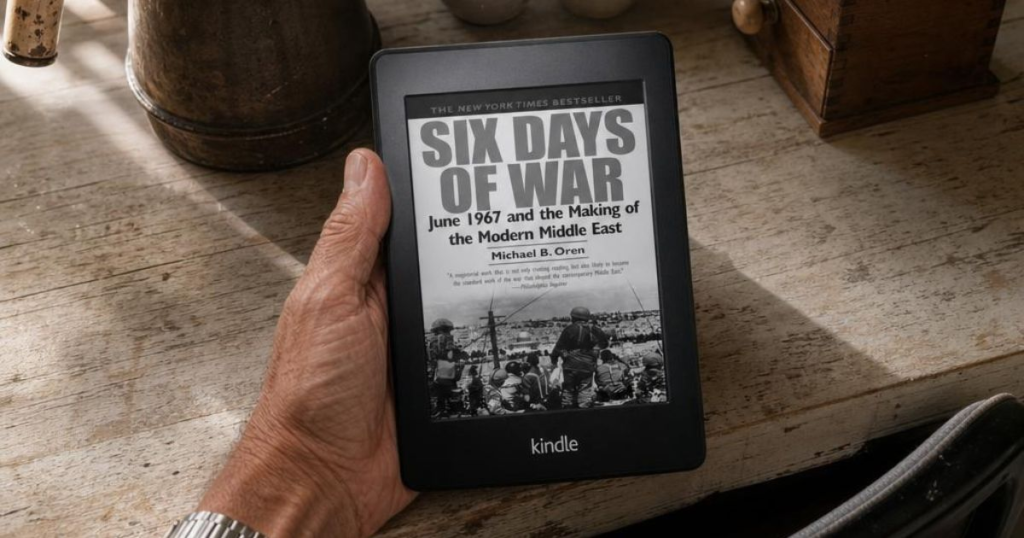
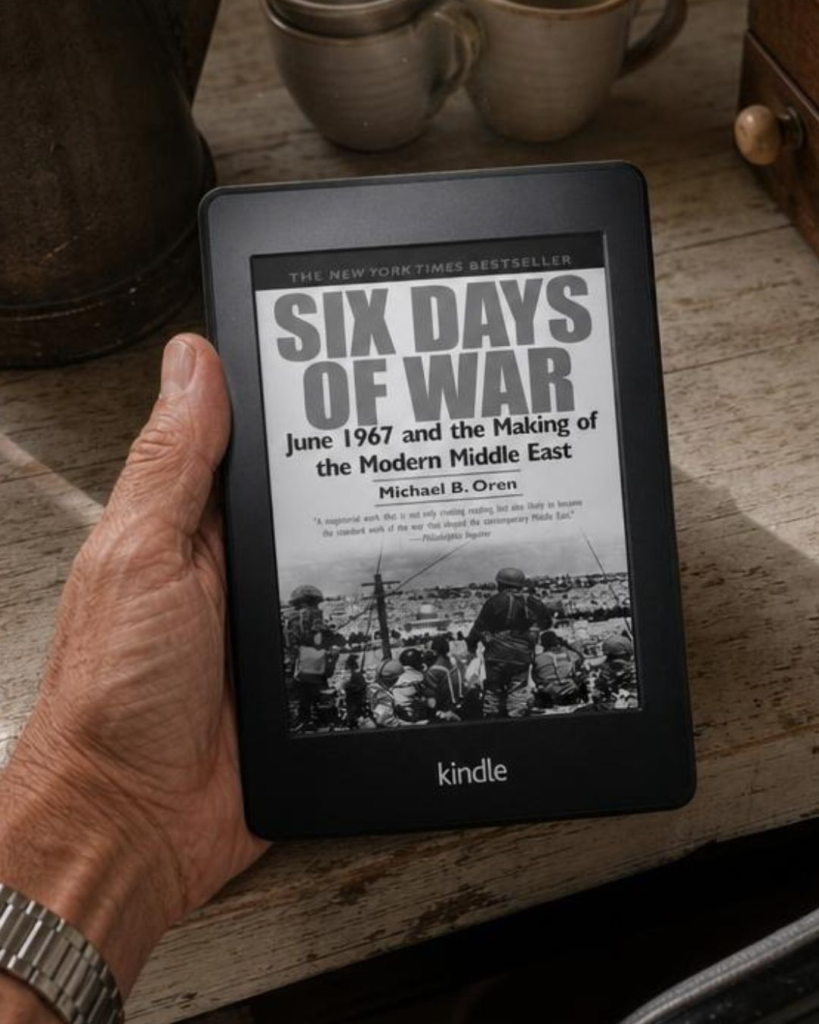
I read Michael Oren’s book Six Days of War, and it still sticks with me. Oren writes like a storyteller, not a lecturer. So I want to share the big pieces with you. Grab a coffee. We’ll keep it simple.
The Six-Day War: Three Tense Weeks in May
The fighting took six days. The build-up took weeks. In mid-May 1967, Egypt’s leader Nasser ordered UN peacekeepers out of the Sinai. Egyptian tanks rolled in. Then he shut the Straits of Tiran, Israel’s sea door to the Red Sea.
Israelis felt the noose tighten. Arab radio blasted threats. Jordan signed a defense pact with Egypt. Syria stayed on edge along the Golan. The Soviet Union backed the Arab side. The United States backed Israel.
Would you wait for the first blow? Or would you swing first? Israel’s leaders chose to swing.
The Leaders Who Called the Shots
Every war has faces. Israel’s prime minister, Levi Eshkol, faced heavy pressure to act. Moshe Dayan was the one-eyed hero of earlier battles. He took over as defense minister days before the first strike. Nasser played the bold Arab champion, but his army wasn’t ready. Jordan’s King Hussein wavered, then joined Egypt. On June 9, Nasser said he’d resign. Then crowds poured into Cairo’s streets, and he stayed.
The Six-Day War: The Morning That Changed Everything
At 7:45 a.m. on June 5, Israeli jets skimmed low over the sea to dodge radar. They hit Egyptian airfields in waves. Hundreds of planes burned on the runways. By lunchtime, Egypt had lost most of its air force. Ouch.
The Six-Day War turned on that single strike. With the skies clear, Israeli ground troops pushed across the Sinai. Jordan jumped in anyway and shelled Israeli towns. Israel answered, and by June 7, its paratroopers stood inside the Old City of Jerusalem.
Then came the Golan Heights. Syrian guns had pounded Israeli villages from those cliffs for years. On June 9 and 10, Israeli forces climbed up and took the heights. The ceasefire followed.
Fewer than 1,000 Israelis died. Arab losses ran far higher. One odd detail still gets me. On June 8, Israeli planes hit the USS Liberty, an American spy ship, and killed 34 sailors. Israel called it a mistake.
What the Win Changed
Israel won big. But the story didn’t end there. Before the war, its borders were small and tight. Afterward, it held the Sinai, Gaza, the West Bank, East Jerusalem, and the Golan Heights. Its land grew to three times the old size.
Hundreds of thousands of Palestinians fled or lost their homes. Many more now lived under Israeli military rule. That fact fed anger, and it fuels debate today.
Arab leaders met in Khartoum that September. They issued three famous refusals: no peace, no recognition, no talks. In November, the UN passed Resolution 242. It urged Israeli withdrawal and peace for all sides. Neither road led anywhere fast.
Peace did come to one front. Egypt and Israel signed a treaty in 1979, and Israel handed back the Sinai. The rest stayed tangled. The Six-Day War left big questions about the West Bank, Jerusalem, and the Golan. Many still have no clear answer.
The Six-Day War: Why It Still Echoes Today
Walk through any news story about Jerusalem, the West Bank, or the Golan, and you’ll hit this war sooner or later. The Six-Day War drew many of the lines people still argue over. It also set the stage for the 1973 Yom Kippur War, when Egypt and Syria struck to win back lost ground. History never stays in the past, does it?
That’s why this story matters. You can’t read today’s headlines with a blank mind. You need the backstory first.
Why Oren’s Book Works
Oren builds Six Days of War day by day. He pulls from documents and interviews. He follows Dayan, Nasser, Hussein, Lyndon Johnson, and Soviet leader Kosygin. You see what each man knew. You see when he knew it. Some plans worked. Others crashed fast. You see how one choice fed the next. Maps help you track the moves. The writing stays clear and plain. I gave the book four out of five stars.
My one gripe? Oren sticks to military and political history. If you want Palestinian voices and everyday life, pair it with a second book. Still, for the Six-Day War itself, it’s the best single read I know.
Key Takeaways
Here’s the quick version. The Six-Day War ran from June 5 to June 10, 1967. A surprise air strike won Israel control of the skies. Israel then took the Sinai, Gaza, the West Bank, East Jerusalem, and the Golan Heights. Peace talks stalled, and the fallout still shapes the region. Want more? Grab Six Days of War, read it, and tell me your thoughts in the comments. What surprised you most?